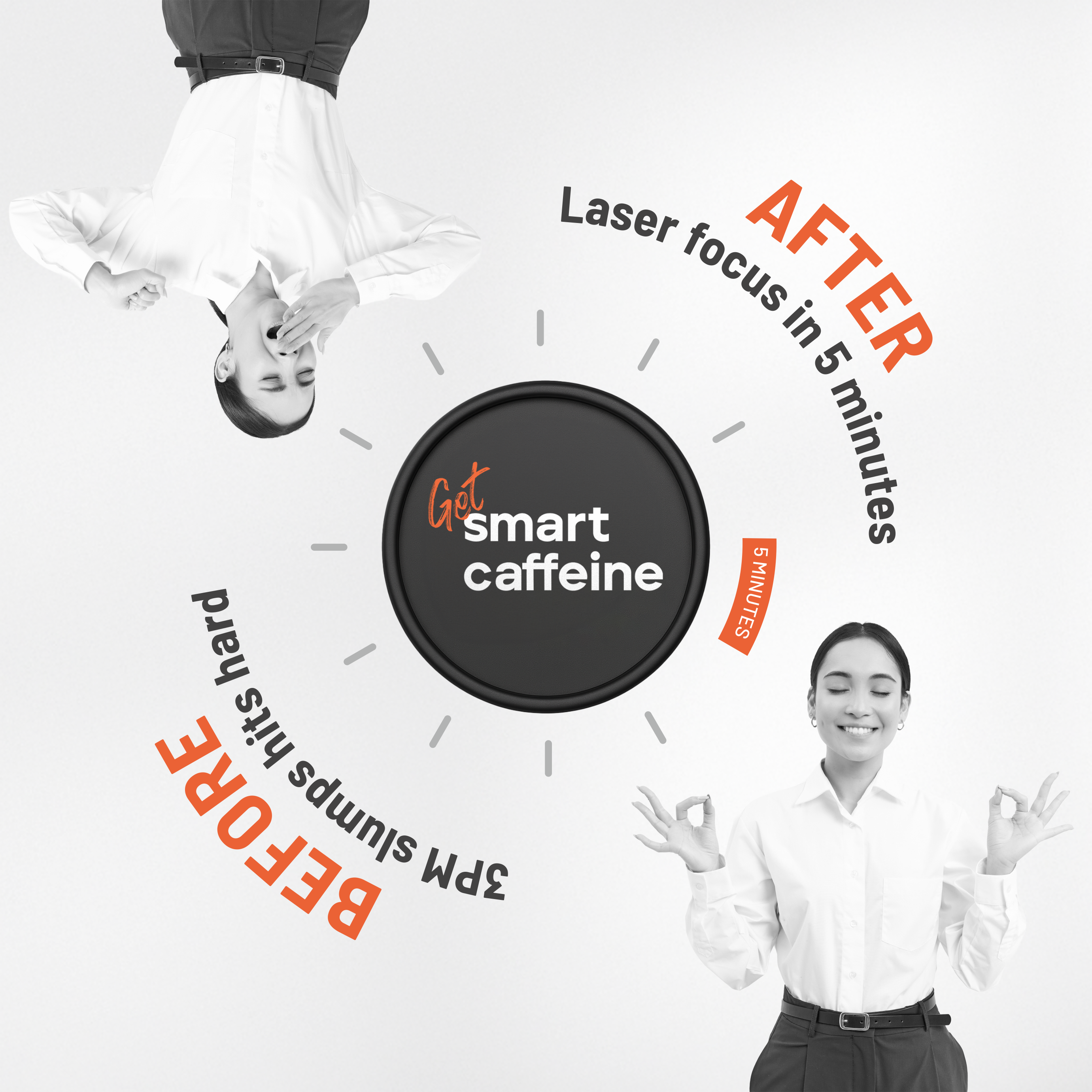
How Caffeine Affects Focus and Concentration
Caffeine is the world's most widely used cognitive enhancer. Millions of people across India and the globe start their day with chai or coffee specifically because caffeine improves focus, alertness, and mental performance. But how exactly does it achieve these effects — and how can you use it more intelligently?
The Brain Science of Caffeine and Focus
The Adenosine System
To understand how caffeine affects focus, you first need to understand adenosine — the brain's natural "tiredness signal."
As you go through the day, adenosine (a chemical byproduct of cellular activity) gradually accumulates in your brain. It binds to adenosine receptors, progressively slowing neural activity and making you feel sleepier. By the time you're ready for bed, adenosine levels are high — and sleep is when your body clears them out.
Caffeine's molecular structure is similar enough to adenosine that it can bind to the same receptors — without activating them. This is called competitive antagonism (blocking a receptor by occupying it without triggering its effect). The result: caffeine prevents adenosine from slowing your brain down, keeping you alert.
The Dopamine and Norepinephrine Effect
Blocking adenosine isn't the whole story. By preventing adenosine from inhibiting neural activity, caffeine indirectly allows dopamine (the motivation and reward neurotransmitter) to flow more freely. Caffeine also directly inhibits the reuptake (recycling) of dopamine, extending its time active in synapses (the gaps between neurons).
This dopaminergic effect is why caffeine not only makes you more alert but also improves mood, motivation, and the sense that tasks are more engaging.
Caffeine also increases norepinephrine — the brain's "action" chemical — which sharpens attention and increases reaction speed.
Caffeine's Specific Effects on Cognitive Function
Attention and Vigilance
This is caffeine's strongest cognitive benefit, backed by dozens of studies. Caffeine significantly improves sustained attention (the ability to maintain focus over time) and vigilance (alertness to sudden changes or stimuli). Effects are most pronounced when you're sleep-deprived, but also measurable in fully rested individuals.
Reaction Time
Caffeine consistently reduces reaction time by 10–20% across multiple studies. This is why it's used by athletes, gamers, and anyone in situations where quick responses matter.
Working Memory
Caffeine has a more modest and variable effect on working memory (holding information in mind while using it). At moderate doses (100–200mg), most people show some improvement, particularly on complex tasks.
Processing Speed
Caffeine improves the speed at which the brain processes information — meaning you can work through tasks faster without sacrificing accuracy.
How Much Caffeine for Focus?
More is not always better. Research on caffeine and focus shows:
| Dose | Effect |
|---|---|
| 40–80mg | Mild alertness improvement, minimal side effects |
| 100–200mg | Optimal focus enhancement for most people |
| 200–400mg | Further benefits but increasing anxiety and jitteriness |
| Above 400mg | Diminishing returns, significant side effects |
Smart Caffeine delivers 80mg of natural caffeine per sachet — a dose specifically chosen to provide clean, focused alertness without overshooting into anxiety or jitteriness. Paired with 162mg of L-Theanine, it's designed to give you the focus benefits of caffeine with the anxious edge smoothed out.
The L-Theanine Factor
Caffeine's effect on focus can be improved by pairing it with L-Theanine. Multiple studies show the combination produces better cognitive performance than caffeine alone:
- L-Theanine counteracts caffeine's anxiety-inducing effects
- The combination improves accuracy on cognitively demanding tasks
- Many people report a "calm focus" quality — alert without being wired
Timing Matters: When to Take Caffeine for Focus
Avoid first thing in the morning. Cortisol (your body's natural wakefulness hormone) peaks 30–45 minutes after waking. Taking caffeine during this window reduces its effectiveness and can contribute to tolerance buildup. Wait 90 minutes after waking.
Best window for focus: 90 minutes after waking through the mid-morning hours (roughly 9:30–11:30am for most people).
Afternoon limit: Caffeine's half-life (the time it takes for half to leave your system) is 5–6 hours. A 3pm coffee means ~half the caffeine is still in your system at 8–9pm — disrupting sleep and creating a next-day fatigue cycle.
Caffeine Alertness vs. True Rest
Caffeine and concentration are related, but caffeine doesn't eliminate the underlying tiredness — it masks it. Adenosine is still accumulating behind the scenes. When caffeine wears off, the adenosine that was waiting behind the dam floods in — causing the familiar caffeine crash.
The solution isn't more caffeine; it's addressing sleep quality and using caffeine strategically rather than as a crutch.
Individual Variation
Caffeine affects focus differently from person to person due to:
- CYP1A2 gene variants (the gene that controls caffeine metabolism) — fast metabolisers get shorter-duration effects; slow metabolisers experience effects longer but with more side effects
- Adenosine receptor density — varies between individuals
- Habitual intake — regular users develop tolerance and need more caffeine to achieve the same effect
- Anxiety sensitivity — people with anxiety disorders may find caffeine counterproductive for focus even at low doses
The Bottom Line
Caffeine improves focus through two main mechanisms: blocking adenosine receptors and boosting dopamine/norepinephrine activity. At moderate doses (80–200mg), timed appropriately and paired with L-Theanine, it's one of the most effective and evidence-backed tools available for sustained cognitive performance.