Nootropics for Beginners: A No-BS Guide to Smart Supplementation
The word "nootropic" (from the Greek for "mind-turning") sounds exotic and technical, but the concept is simple: nootropics are substances that support cognitive performance — including focus, memory, creativity, and mental resilience.
The nootropics market is full of hype. This guide is specifically for people who want the truth — what's proven, what's plausible, and what's pure marketing.
What Are Nootropics?
The term was coined in 1972 by Romanian psychologist Corneliu Giurgea, who proposed that a true nootropic must:
- Enhance memory and learning
- Support brain function under disruptive conditions
- Protect the brain from chemical and physical assault
- Increase tonic cortical/subcortical control (improve brain communication)
- Have minimal side effects and low toxicity
In modern usage, the definition has broadened. "Nootropic" now loosely refers to any supplement, food, or compound that supports cognitive function — with varying levels of evidence.
The Nootropics Hierarchy: Evidence Tiers
Not all nootropics are created equal. Here's a practical framework:
Tier 1: Well-Validated (Strong human evidence)
- Caffeine — the most-studied cognitive enhancer; proven benefits for focus, alertness, and performance
- L-Theanine — proven to reduce anxiety and improve attention; synergises powerfully with caffeine
- Creatine — well-established for both physical and cognitive performance, especially under sleep deprivation
- Omega-3 DHA — essential for brain structure and function; supplementation improves cognition in deficient individuals
Tier 2: Well-Supported (Good human evidence)
- L-Tyrosine — strong evidence for stress-resilience and maintaining cognition under pressure
- Alpha-GPC — proven choline source that enhances memory and focus
- Bacopa Monnieri — an Ayurvedic herb with consistent research showing improved memory over 8–12 weeks
- Lion's Mane — growing evidence for neuroprotection and cognitive enhancement
- Phosphatidylserine — supports cell membrane health and has memory-related benefits
Tier 3: Promising (Limited or mixed human evidence)
- Ashwagandha — stress reduction evidence is solid; direct cognitive enhancement evidence is emerging
- Rhodiola Rosea — adaptogen with reasonable data on reducing mental fatigue
- Ginkgo Biloba — historically popular but mixed research; more relevant in older populations
- Modafinil — prescription-only; genuine cognitive benefits but not OTC in India
Tier 4: Speculative (Mostly animal or low-quality evidence)
- Many proprietary blends and multi-ingredient "brain supplements"
Best Nootropics for Beginners: Where to Start
For someone new to nootropics, the ideal starting point is the caffeine + L-Theanine stack — for several reasons:
- Strongest evidence base — more studies than virtually any other combination
- Immediate, noticeable effects — you'll know within an hour if it's working
- Safe and well-tolerated — minimal risk for most people
- Affordable — especially in India, caffeine is easily accessible
- Gateway to further experimentation — establishes a baseline from which to add other compounds
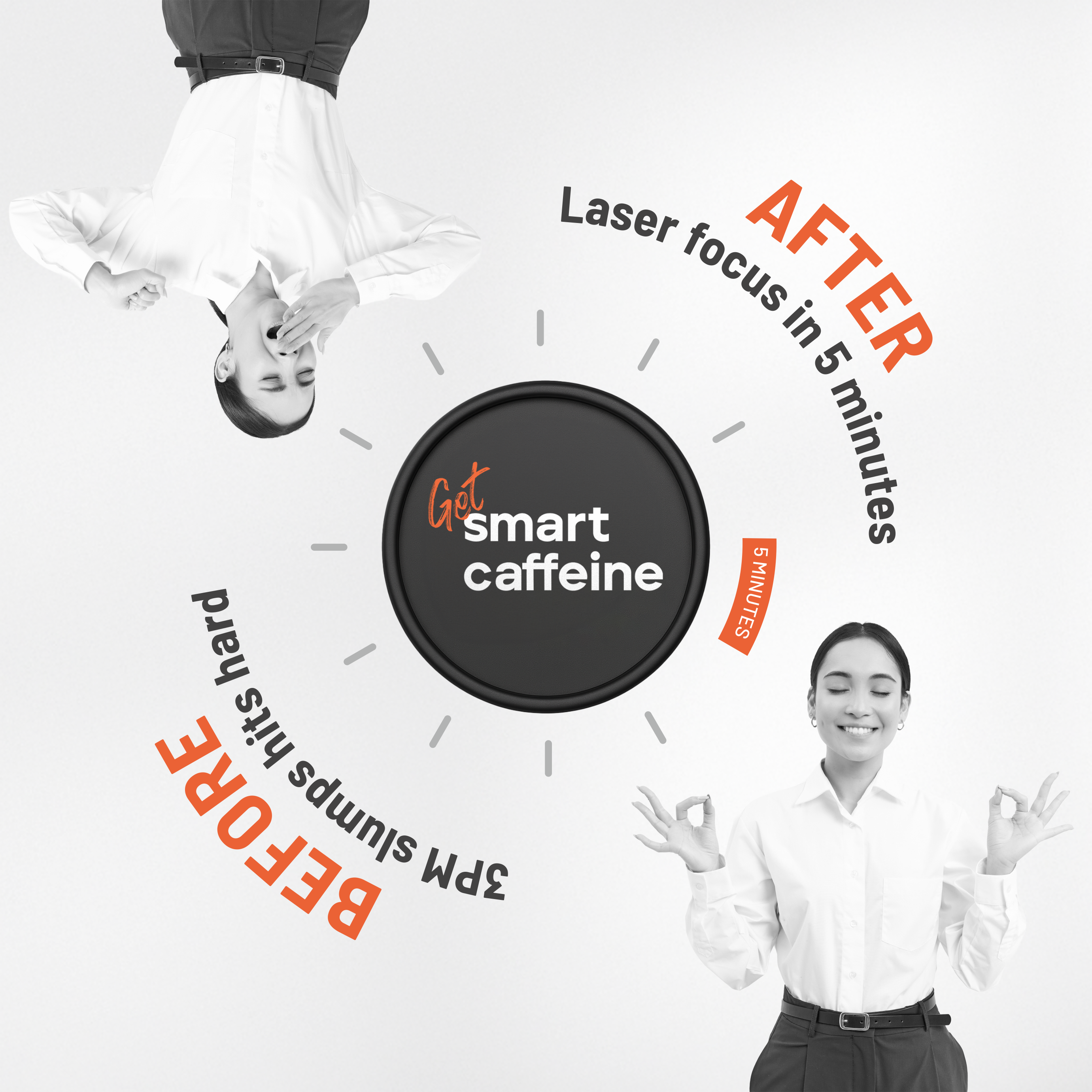
Smart Caffeine is essentially a premium, pre-formulated beginner's nootropic stack — caffeine and L-Theanine at proven ratios, plus L-Tyrosine and B vitamins for additional support. At ₹599 for 30 servings (about ₹20 per day), it's one of the most cost-effective ways to get started.
Best Nootropics India: What's Available
The nootropic landscape in India has developed significantly:
Widely available:
- Smart Caffeine (caffeine + L-Theanine + L-Tyrosine)
- Ashwagandha (KSM-66 and Sensoril extracts)
- Bacopa Monnieri (available in traditional stores and modern supplements)
- Creatine monohydrate
- Omega-3 fish oil / algal DHA
- Alpha-GPC and CDP-choline
- Lion's Mane (growing availability)
Less common or import-only:
- Phosphatidylserine
- Racetams (piracetam, aniracetam — grey-area legal status in India)
- Modafinil (prescription-only)
Nootropic Stacks: How to Combine Them
Once you're comfortable with caffeine + L-Theanine, you can build a more comprehensive nootropic stack:
Beginner stack:
- Caffeine 80–100mg + L-Theanine 160–200mg (Smart Caffeine handles this)
Intermediate stack:
- Smart Caffeine + Bacopa Monnieri (300–600mg) — for memory and learning
Advanced stack:
- Smart Caffeine + Alpha-GPC (300mg) + Lion's Mane (500mg) + Omega-3 DHA
Stress-focused stack:
- Smart Caffeine + Ashwagandha (KSM-66, 600mg) + Rhodiola Rosea (400mg)
Common Beginner Mistakes
Expecting overnight transformation. Some nootropics (like bacopa and lion's mane) require 4–8 weeks to show significant effects. The caffeine + theanine stack works quickly, but most cognitive supplements require consistent use.
Taking too many at once. Start with one or two compounds. Adding five new supplements simultaneously makes it impossible to know what's working.
Ignoring sleep and lifestyle. No nootropic compensates for consistently poor sleep, sedentary lifestyle, or chronically poor nutrition. These foundations matter more than any supplement.
Buying cheap, unverified products. Third-party testing and standardised extracts matter — especially for products like lion's mane and ashwagandha where potency varies wildly.
The Bottom Line
Nootropics for beginners starts with the caffeine and L-Theanine stack — the most evidence-backed, safe, and immediately effective cognitive combination available. From there, building slowly and tracking effects is the key to finding what works for your specific brain and lifestyle.