Caffeine for Night Shifts and Late Work Hours
India has one of the world's largest populations of shift workers — from BPO and IT professionals handling US or European time zones, to healthcare workers, security personnel, factory workers, and logistics staff working through the night. The challenge of staying alert during night hours while maintaining any semblance of normal health is one of the most difficult cognitive performance problems people face.
Caffeine can help — but the strategy for night shift caffeine is fundamentally different from day shift use.
The Night Shift Challenge
Your circadian rhythm (the body's internal 24-hour clock, regulated by light, temperature, and social cues) is designed to make you sleepy at night and alert during the day. When you work nights, you're fighting this system:
- Adenosine pressure is highest during the night shift hours (you've been awake since morning or afternoon)
- Cortisol is at its daily low during overnight hours
- Body temperature drops around 3–5am (your biological low point), causing peak sleepiness
- After the shift, you're trying to sleep during daylight hours when your body wants to be awake
Caffeine is one of the few tools that can effectively counter the adenosine pressure building during night shifts — but using it wrong disrupts daytime sleep recovery.
The Core Caffeine Night Shift Strategy
Before the Shift
- Get some sleep before your first night shift — even a 3–4 hour nap in the afternoon before a night shift reduces total sleep deprivation
- Avoid caffeine in the 6 hours before your intended daytime sleep
During the Night Shift
Dose: 80mg caffeine (one Smart Caffeine sachet) is appropriate. Higher doses don't add proportional benefit and increase anxiety/discomfort during already stressful overnight hours.
Timing during the shift:
- 1st dose: First 30–60 minutes of the shift — to establish alertness before adenosine pressure peaks
- Optional 2nd dose: Around the 3–4 hour mark of the shift if tiredness becomes significant
- Hard stop: No caffeine in the last 5–6 hours before your planned daytime sleep
Example (10pm–6am shift):
- 10:00–10:30pm: First caffeine dose
- 1:00–2:00am: Optional second dose if needed
- No caffeine after 2am (6-hour sleep window by 8am)
The 3–5am Biological Low: The Hardest Part
Almost every shift worker identifies the 3–5am window as the most difficult. This is your circadian nadir (lowest point) — body temperature and alertness are at their physiological minimum. Caffeine helps but doesn't fully override this.
Additional strategies for the 3–5am window:
- Cold water splash on face — activates the sympathetic (fight-or-flight) system
- Brief physical movement — 5–10 minutes of brisk walking significantly increases alertness
- Bright light exposure — if your workplace allows, bright overhead lighting helps suppress melatonin
- Social interaction — talking to colleagues maintains alertness better than passive work
After the Shift: Protecting Daytime Sleep
This is where many shift workers make their most damaging mistake — taking caffeine during or after the commute home, which then prevents daytime sleep and creates a chronic sleep debt cycle.
Protocol for sleeping after a night shift:
- No caffeine after the last 5–6 hours of your shift
- Wear sunglasses for the commute home (reduces light exposure that signals wakefulness)
- Use blackout curtains or a sleep mask
- Tell household members your sleep window
- Melatonin (0.5–1mg) 30 minutes before daytime sleep can help your brain shift to sleep mode
- Sleep in the coolest room available
Smart Caffeine for Night Shift Workers
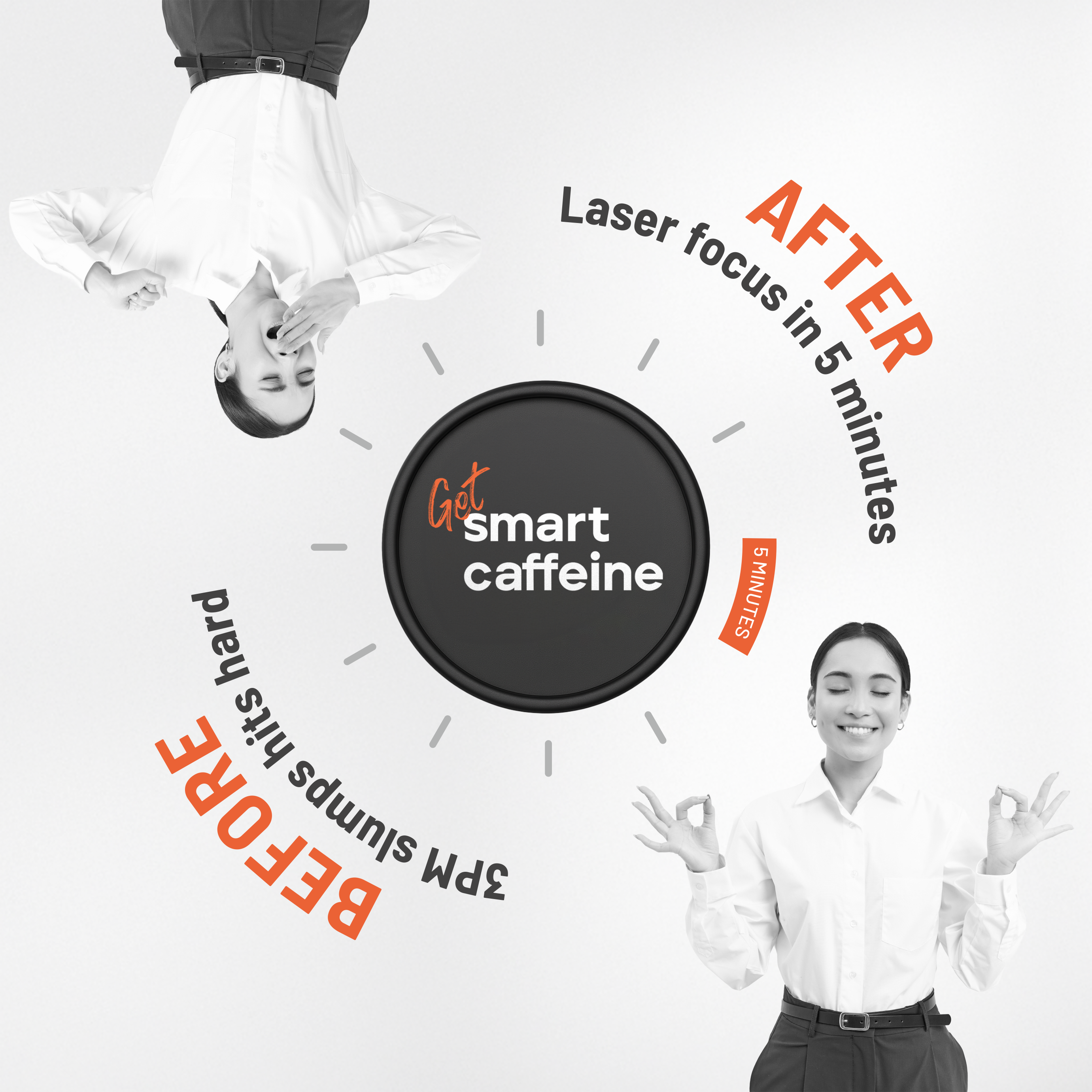
Smart Caffeine sachets are particularly well-suited to night shift use:
Pocket-sized: Easy to carry and use during busy overnight shifts without needing a kettle or break room
Fast-absorbing: The fast-melt format means effects begin in 15–20 minutes — useful when you need to be sharp quickly after a break
Precise dosing: 80mg per sachet means you can strategically time and dose without accidentally over-caffeinating late in the shift
L-Theanine included: Reduces the anxiety that high-dose caffeine can cause during already stressful overnight environments
L-Tyrosine included: Supports dopamine and norepinephrine during periods of sleep deprivation — specifically validated in research on fatigued workers and military personnel
Health Considerations for Long-Term Shift Workers
Caffeine can help manage individual nights, but chronic shift work carries genuine health risks that caffeine cannot address:
- Increased cardiovascular disease risk
- Higher rates of metabolic syndrome and type 2 diabetes
- Elevated risk of depression and anxiety
- Disrupted hormonal rhythms
Long-term shift workers should prioritise:
- Consistent sleep duration (even if at unusual hours)
- Dietary quality (shift work often leads to convenient, poor-quality food choices)
- Vitamin D supplementation (many shift workers are light-deprived)
- Regular exercise (can partially reset circadian rhythm)
- Melatonin supplementation to facilitate daytime sleep
The Caffeine Nap Strategy for Shift Workers
If your workplace has a break room and allows brief rest:
- Take 80mg caffeine (one Smart Caffeine sachet)
- Immediately lie down and rest (not necessarily full sleep) for 15–20 minutes
- Wake up as the caffeine takes effect
This "caffeine nap" clears some accumulated adenosine during the rest and then has caffeine's receptor blockade kicking in as you wake — providing a more pronounced second wind than either alone.
The Bottom Line
Caffeine is a valuable tool for night shift workers — but the strategy is more delicate than daytime use. Keep doses moderate (80mg), time the last dose at least 5–6 hours before your planned sleep, use additional alertness strategies for the 3–5am nadir, and aggressively protect your daytime sleep quality. Smart Caffeine's portable sachet format and moderate dose make it well-suited to the practical realities of shift work.