Caffeine for Work Focus and Productivity
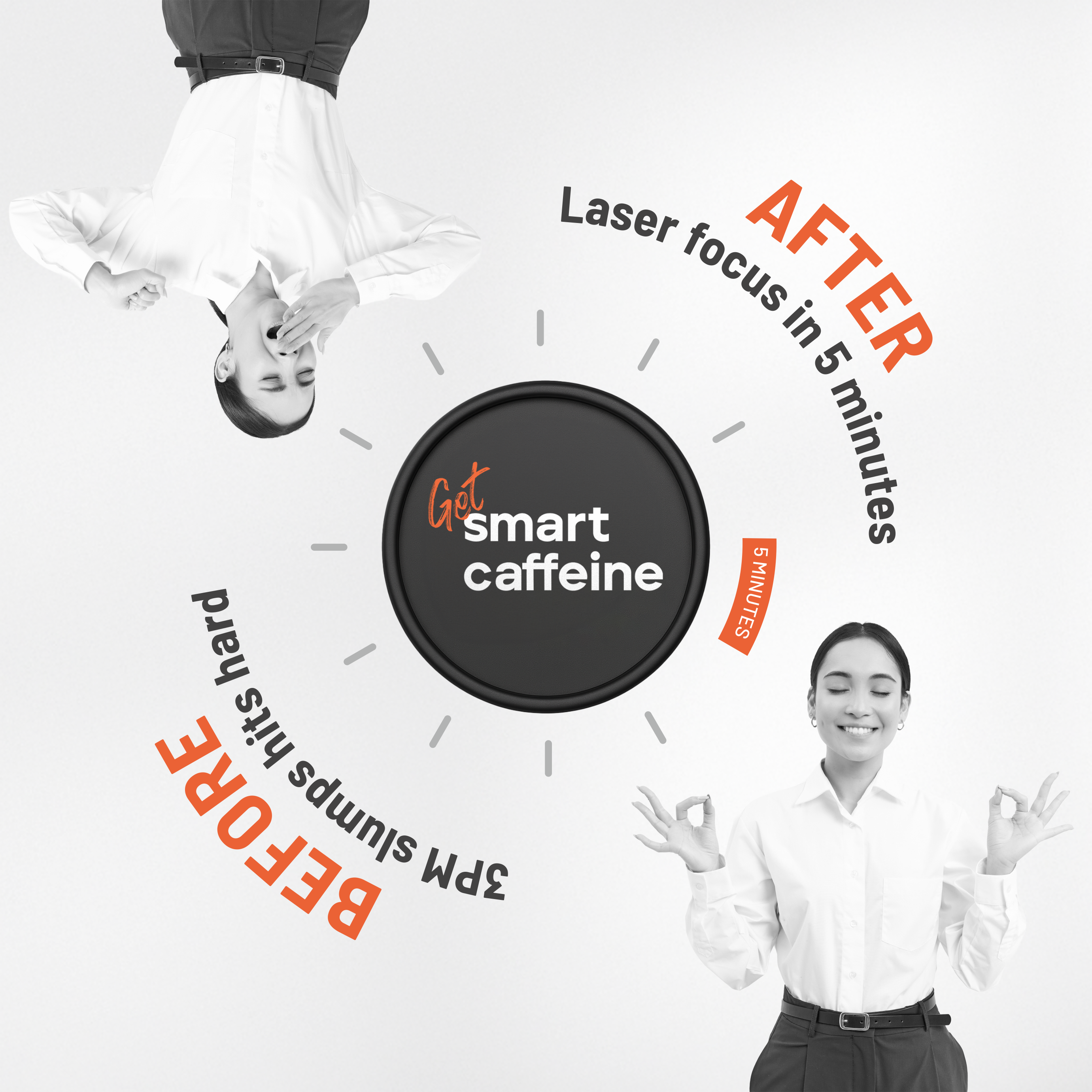
Millions of working Indians start their workday with chai or coffee — intuitively using caffeine for work focus before the science behind it was widely understood. Modern neuroscience explains exactly why this works, and how to do it much better than the average person does.
How Caffeine Improves Work Performance
Attention and Vigilance
Caffeine consistently improves sustained attention — the ability to maintain focus on a task over long periods without the mind wandering. This is directly relevant to the desk-based, document-heavy, meeting-intensive reality of most professional work.
Processing Speed
Caffeine makes your brain process information faster — you can read, analyse, and respond more quickly without sacrificing accuracy at moderate doses.
Decision Quality Under Fatigue
Decision-making quality deteriorates significantly with fatigue. Caffeine partially compensates — particularly in the afternoon when cognitive performance naturally dips. Studies consistently show better decision accuracy under caffeine in fatigued individuals.
Mood and Motivation
Through dopamine, caffeine improves mood and reduces the subjective "heaviness" of cognitively demanding tasks. This isn't superficial — when tasks feel more engaging, you do them more carefully and completely.
The Workplace Caffeine Timing Protocol
For an 8:30am–6:30pm workday:
7:00am – Wake up: Don't caffeinate yet. Morning cortisol is handling wakefulness.
8:30–9:00am – First caffeine dose: The cortisol peak has passed. This is your primary performance window. One Smart Caffeine sachet (80mg caffeine + L-Theanine) here sets up your morning.
10:30–11:00am – Deep work session: Your brain is now at peak alertness. Schedule your most demanding work here (complex analysis, writing, strategy).
12:30–1:00pm – Lunch: Avoid caffeine with lunch — eat, rest briefly if possible.
1:30–2:00pm – Optional second dose: If afternoon fatigue is significant, a second 80mg dose can extend productive afternoon hours. Must be before 2pm for a 10–11pm bedtime.
2:00–4:00pm – Secondary work session: Meetings, email processing, lower-stakes tasks.
After 2pm: No more caffeine. Protect your sleep.
Caffeine for Deep Work
Deep work (Cal Newport's term for cognitively demanding, focused, distraction-free work) is where caffeine's benefits are most pronounced. The combination of:
- Increased sustained attention
- Improved processing speed
- Reduced distractibility
- Heightened dopamine-driven engagement
...maps directly onto the requirements of effective deep work sessions.
Smart Caffeine is specifically designed for this. The 80mg caffeine + 162mg L-Theanine + 249mg L-Tyrosine combination produces what many users describe as "quiet focus" — alert, engaged, and resistant to distraction without the anxious edge that high-dose caffeine can cause.
The Meeting Problem
Meetings are cognitively demanding in a different way — they require active listening, quick processing, verbal fluency, and the ability to contribute meaningfully while following others' contributions simultaneously.
Caffeine helps with all of these — reaction time, verbal fluency, and active listening all improve. Importantly, the L-Theanine in Smart Caffeine reduces the social anxiety that caffeine alone can worsen, making meetings feel more manageable rather than more stressful.
Caffeine and Work From Home
Work from home presents unique caffeine challenges:
- No commute as a natural energy primer
- Kitchen access makes continuous snacking and coffee easy — contributing to overconsumption
- Blurred work/rest boundaries make late caffeine common
For remote workers, Smart Caffeine sachets are particularly useful: a single, precise-dose sachet replaces the unconscious "just one more cup" pattern that work-from-home can create.
WFH protocol:
- One sachet at 9am (not first thing)
- Optional second sachet at 1pm if needed
- Hard cutoff: no caffeine in the home kitchen after 2pm
Managing Afternoon Energy Without Caffeine
The post-lunch energy dip (approximately 1–3pm) is partly biological and partly caffeine-related. Rather than reaching for more caffeine:
- 15–20 minute nap (if possible): dramatically restores afternoon alertness
- 10-minute walk outside: improves cerebral blood flow and breaks monotony
- Hydration check: mild dehydration significantly impairs cognitive performance
- Smaller, lower-carbohydrate lunch: large meals cause blood sugar spikes followed by cognitive dulling
The Creative Work Question
For creative work — writing, design, ideation — higher doses of caffeine can be counterproductive. Creativity benefits from certain types of mental relaxation and associative thinking that high-dose stimulants suppress.
Lower-dose caffeine (40–80mg) with L-Theanine is better for creative work than the 200–400mg range that some people use for "getting stuff done."
Building the Right Relationship with Work Caffeine
Signs caffeine is working for you:
- You feel focused and calm within 60 minutes of your morning dose
- You can work without caffeine on rest days without significant difficulty
- Your sleep is unaffected
- You're not escalating your dose over time
Signs caffeine is working against you:
- You need caffeine just to feel normal (not sharp, just baseline)
- You feel irritable, anxious, or unfocused without it
- You're sleeping poorly despite cutting off by 2pm
- You've escalated from 1 cup to 4–5 cups over months
If you recognise the second set, a 2–3 week caffeine break followed by restarting at a lower dose (one Smart Caffeine sachet) can restore the relationship.
The Bottom Line
Caffeine for work focus is genuinely effective when used strategically. The key elements: wait 90 minutes after waking, dose at 80–100mg for most cognitive work, pair with L-Theanine (as in Smart Caffeine), schedule the second dose before 2pm, and protect your sleep consistently. This approach gives you years of productive caffeine use without the tolerance cycle that makes heavy coffee drinkers dependent rather than enhanced.